Creole Rock · Saint Martin
The island's signature snorkel stop off Grand Case — shallow reef, clouds of fish, nature-reserve moorings.
Turtles over the seagrass, clouds of fish on the reef — the best swim stops of three islands, planned around real conditions.
The water between Saint Martin, St. Barts and Anguilla holds some of the Caribbean's most accessible snorkeling — shallow reefs, seagrass meadows full of turtles, and sand cays where you can drift off the beach into clouds of fish.
Snorkeling opportunities always vary with wind, swell, visibility, water conditions, access restrictions and marine-reserve rules — and with your yacht's location and itinerary. We plan honestly around the day's conditions rather than promising a fixed stop list.
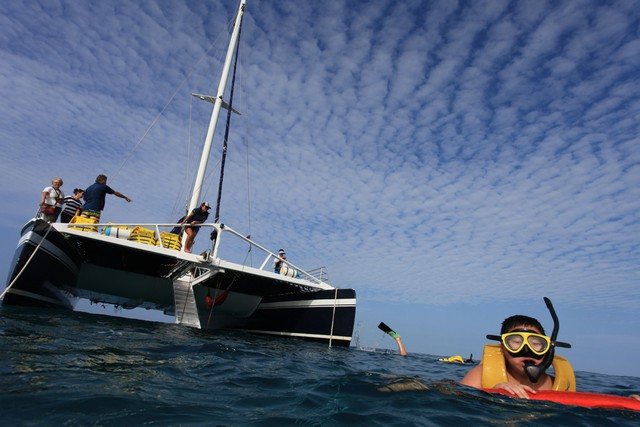
The island's signature snorkel stop off Grand Case — shallow reef, clouds of fish, nature-reserve moorings.
A wild, uninhabited island in the reserve with clear water off a long beach.
Knee-deep turquoise shallows — the gentlest snorkel on the island.
Seagrass, reef edges and frequent turtles at St. Barts' road-free bay.
A protected lagoon where turtles graze the seagrass in bath-calm water.
A cliff-ringed natural pool with glassy, fish-filled water.
Snorkel straight off the sand of a tiny cay, then lunch at its restaurant.
Reefs rich with grouper, snapper and barracuda around twin offshore cays.
Tell us your group, confidence in the water and preferred island — we will match stops to the forecast.
In Saint Martin: Creole Rock, Tintamarre and Pinel Island, all within or near the nature reserve. In St. Barts: Colombier Bay and the Grand Cul-de-Sac lagoon. In Anguilla: Little Bay, Sandy Island, Prickly Pear and Anguillita. Your captain chooses stops based on the day's conditions.
Blue Devil's supplied inventory includes a snorkeling kit, and many other yachts carry masks and fins — inventories vary by vessel, so we confirm equipment for your specific yacht when quoting. You are always welcome to bring your own gear.
We never promise sightings. Turtles are frequently seen over the seagrass at Colombier and Grand Cul-de-Sac and around Tintamarre, but wildlife is wildlife. What we can promise is a captain who knows where the odds are best on the day.
Wind, swell, visibility and water temperature all matter. A stop that is glassy one day can be murky the next. Captains check the forecast and sea state, choose sheltered lees, and will move a snorkel stop rather than deliver a poor experience.
The reserve protects 30 km² of the northeast coast — coral reefs, mangroves, seagrass beds, ponds and coastal forest. Key rules include using designated moorings, no anchoring on coral or sensitive seabeds, no drones, and advance authorization for overnight mooring at Tintamarre (requested at least three days ahead).
No — responsible chartering never anchors on coral. In protected areas captains use designated moorings; elsewhere they anchor on sand. This protects the reefs that make the snorkeling worth doing.
Yes — stops like Pinel, Little Bay and Grand Cul-de-Sac offer shallow, calm, clear water ideal for first-timers in settled conditions. Crews provide basic guidance, and flotation aids are commonly available. Non-swimmers enjoy the stops from the platform or tender.
Children who are comfortable in the water usually love it, with adult supervision and properly fitting gear. Tell us the ages in your group and we will recommend family-friendly stops and confirm suitable equipment sizes on your yacht.
Swimwear, reef-safe sunscreen, a hat, and a rashguard if you burn easily. Reef-safe sunscreen matters: it protects both your skin and the coral. Towels are typically provided on crewed charters — confirmed per yacht.
Absolutely — a snorkel at Creole Rock before a Grand Case lunch, or Colombier before a Saint-Jean beach-club afternoon, are classic pairings. Tell us your priorities and we sequence the day accordingly.